Apply for your Card Today!
Image
Featured In and Trusted By

DISCLAIMER: This article is for educational purposes only and should not be considered medical advice. Consult your doctor before making any decisions about medical marijuana treatment. The information provided here does not substitute for professional medical consultation, diagnosis, or treatment.


Post-traumatic stress disorder (PTSD) is a mental health condition that develops after experiencing or witnessing a traumatic event. This condition affects approximately 6% of Americans, with Texas being home to thousands of PTSD patients.

PTSD is caused by exposure to actual or threatened death, serious injury, or sexual violence. Unlike normal stress responses that fade over time, PTSD symptoms persist for more than a month and significantly interfere with daily life.

The condition goes beyond just remembering difficult events. The brain gets stuck in a state of high alert, making it difficult to feel safe even when there’s no real danger.

In Texas, PTSD was added to the medical marijuana qualifying conditions in 2021 through House Bill 1535. This is an important step forward in providing alternative treatment options for patients who haven’t found relief through traditional therapies and medications.

This expansion recognized the growing body of evidence supporting cannabis as a potential therapeutic tool for trauma-related symptoms.

The Texas program allows access to low-THC cannabis products, meaning they contain very minimal amounts of the psychoactive component.

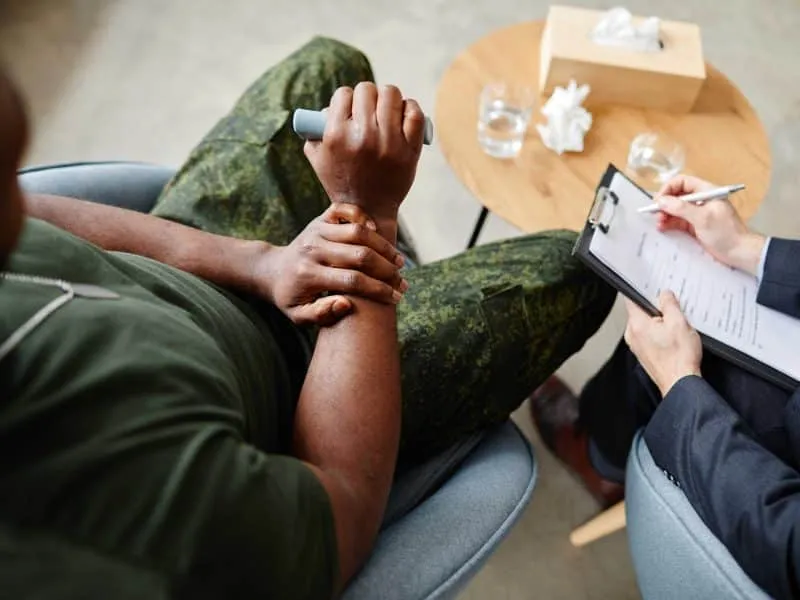
soldier at theraphy session

Types of PTSD

The types of PTSD depend on the trauma experienced and its causes.

Combat-Related PTSD

Combat-related PTSD affects military veterans and active service members who have experienced either combat warfare or military sexual trauma. It also comes from repeated exposures and can include moral injury from witnessing or participating in events that conflict with personal values.

Civilian Trauma PTSD

Caused by life-threatening accidents, natural disasters, or violent crimes.

Complex PTSD

Complex PTSD develops from prolonged, repeated trauma that sometimes starts in childhood. The most common are abuse, neglect, or domestic violence.

Complex PTSD sometimes comes with other symptoms like difficulty regulating emotions, negative self-concept, and problems with relationships.

Secondary or Vicarious PTSD

First responders, healthcare workers, therapists, and others who regularly witness trauma or hear detailed accounts of traumatic events are affected by secondary or vicarious PTSD. This type can develop even without direct personal trauma exposure.

Delayed-Onset PTSD

Symptoms may not manifest for months or even years following the traumatic incident. This causes confusion for patients who may initially connect their symptoms to past trauma.

Each type of PTSD may respond differently to different treatments, including medical marijuana.

military in arms

How Medical Marijuana Can Help Texas Patients with PTSD Manage Their Symptoms

Research shows that cannabis-based treatments might help control some PTSD symptoms by working with the body’s endocannabinoid system, which is a complicated system of receptors, enzymes, and natural substances that helps manage important functions like mood, memory, sleep, pain, and stress.

Fear Memory Processing and Trauma Recovery

Research demonstrates that CBD can reduce conditioned fear responses and help block the brain’s ability to consolidate and retain fear memories.

Studies show that CBD and THC can facilitate the process of reducing fear responses triggered by negative or traumatic events.

Sleep and Nightmare Relief

Early-phase clinical research shows that THC may be effective for improvement in self-reported sleep quality and reduction in nightmare frequency in PTSD patients.

A 2019 study found that individuals with PTSD who used cannabis experienced fewer nightmares and reported improved sleep quality, with participants using strains higher in THC showing more significant nightmare reduction.

Anxiety and Hyperarousal Management

CBD’s anti-anxiety properties can help manage the hypervigilance and constant state of alert that characterize PTSD.

Studies indicate that CBD can calm activity in the amygdala, the brain region responsible for fear processing that becomes overactive in PTSD patients. This calming effect can help reduce the excessive fear responses to everyday situations.

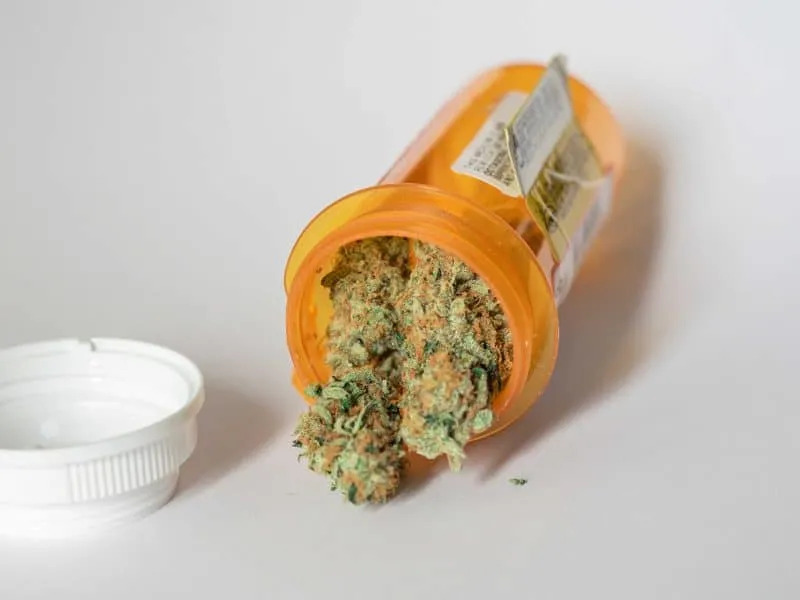
medical marijuan in a jar

Mood Stabilization and Depression Relief

Many PTSD patients struggle with depression, guilt, shame, and emotional numbness. Cannabis can stimulate CB1 receptors in the prefrontal cortex, which can increase serotonin levels and reduce depression while improving mood, memory, and neurogenesis.

Inflammation and Stress Response

CBD’s anti-inflammatory properties may help address the chronic inflammation associated with prolonged stress responses in PTSD.

Research shows that people with PTSD have lower concentrations of endocannabinoids, 2-arachidonoylglycerol (2-AG), which can help restore natural balance.

Therapeutic Enhancement

Cannabis may assist with psychotherapy.

Dosage and Formulation Considerations

Research indicates that different THC-to-CBD ratios may be effective for different symptoms.

High-THC formulations, high-CBD formulations, and balanced combinations have all shown benefits in studies. This allows medical marijuana doctors to create personalized approaches based on the symptom profiles of their patients.

The Texas medical marijuana program allows tinctures, capsules, topicals, and, starting in September 2025, approved inhalation devices.

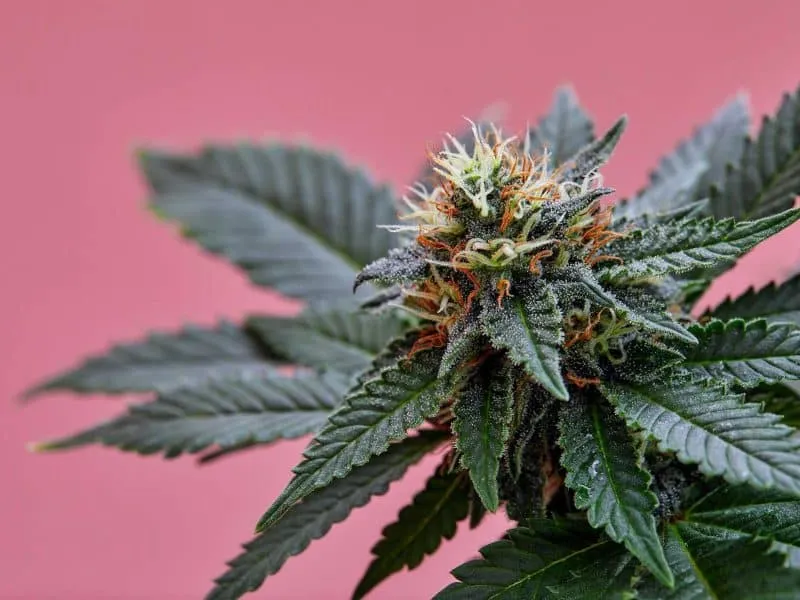
medical-marijuana-buds-and-seed

Can PTSD Patients in Texas Qualify for Medical Marijuana?

Yes, PTSD patients in Texas can qualify for medical marijuana through the state’s Compassionate Use Program. PTSD was officially added to the list of qualifying conditions established in September 2021 through House Bill 1535, which represented a significant victory for patients and advocates who had long pushed for this inclusion.

The Texas Compassionate Use Program covers the treatment of incurable neurodegenerative diseases, among other qualifying conditions.

Qualification Requirements:

  • Must be a permanent resident of Texas
  • Must have a documented diagnosis of PTSD
  • Must obtain a prescription from a Compassionate Use Program-registered physician
  • No age restrictions apply, though minors need parental consent

Important Updates

Starting September 1, 2025, the program allows lotions, transdermal patches, suppositories, and approved inhalation devices, including nebulizers, vaporizers, and inhalers, when approved by a prescribing doctor.

The program has been gradually expanding. In 2015, Texas passed the Compassionate-Use Act, which was expanded in 2019 and 2021 to include other conditions, including incurable neurodegenerative diseases.

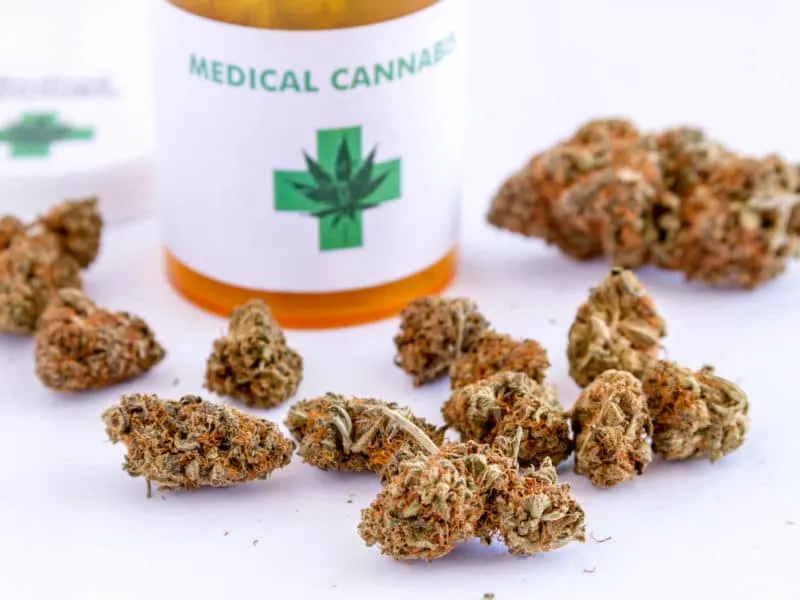
medical marijuana flower

How to Sign Up for a Medical Marijuana in Texas

Step 1: Register with TeleLeaf

Connect with one of their licensed doctors who are registered with the state’s Compassionate Use Program. TeleLeaf offers same-day appointments and certification. making the process more accessible for PTSD patients who may have mobility challenges.

Sign up for a Texas medical marijuana card.

Step 2: Medical Consultation

During your consultation, one of our licensed doctors will review your medical history and PTSD diagnosis. If you qualify, they will enter your prescription directly into the Compassionate Use Registry of Texas (CURT) system.

Step 3: Access Medicine at Licensed Dispensaries

Once your prescription is in the system, you can visit any licensed dispensaries in Texas. Starting September 1, 2025, the state will have up to 15 total dispensing organizations (up from the current 3), improving access statewide.

You’ll need to provide your ID, name, date of birth, and the last five digits of your Social Security Number to purchase your medication.

New in 2025: Prescriptions are now valid for one year with four 90-day refills, which can be partially filled within each 90-day period, providing greater flexibility for patients.

You can buy your cannabis from one of the dispensaries below:

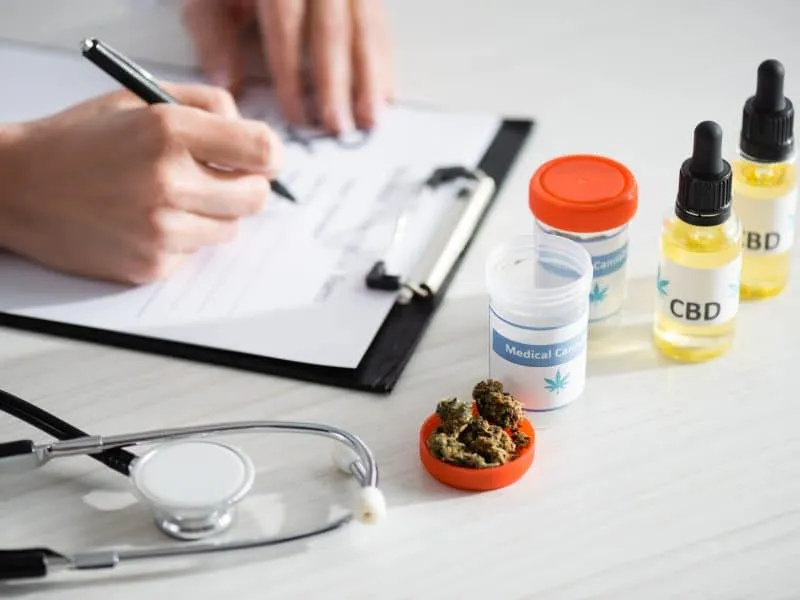
cropped view of doctor writing prescription near dried weed, bottles with cbd and medical cannabis

What Does Life with PTSD Look Like?

  • Sudden flashbacks, nightmares, and physical reactions that make trauma feel present and immediate.
  • Chronic insomnia, nightmare avoidance, and exhaustion.
  • Constant alertness for threats, being easily startled, and feeling unsafe in familiar places.
  • Withdrawing from triggering people, places, or activities.
  • Numbness toward positive feelings, detachment from loved ones, and loss of interest in previously enjoyable activities.
  • Memory problems, difficulty concentrating, and challenges with decision-making and organization.
  • Unexplained chronic pain, headaches, and gastrointestinal problems stemming from trauma.
  • Trust issues, communication problems, and a tendency to push away support systems
  • Unpredictable anger, overwhelming guilt or shame, and emotional swings that damage relationships
  • Performance problems, attendance issues, and difficulty meeting responsibilities
  • Feeling fundamentally changed, questioning personal values, and struggling with self-worth
  • Medical costs, lost income, and treatment expenses create additional stress
A businessman sitting on the floor depressed and stressed with problems in his life.

Your Journey to Healing Starts Here: Partner with TeleLeaf

Living with PTSD doesn’t have to mean living without hope.

TeleLeaf understands that PTSD affects everyone differently, and cookie-cutter approaches don’t always work.

Our streamlined telemedicine process makes it easy to get evaluated from the comfort and safety of your own home. No waiting rooms or travel required.

We’re here to guide you through every step, from initial consultation to ongoing support as you find the right products and dosages for your symptoms.

Contact us today.

man laying on grass relaxing
How to Get Medical Marijuana Card in Texas

Medical marijuana has been legal in Texas in limited forms for several years, but access has historically been restricted. In 2015, the state introduced the Texas Compassionate Use Program (CUP), and over time, lawmakers expanded the list of qualifying conditions through updates in 2019 and 2021. Today, many Texans with chronic or debilitating medical conditions can legally obtain low-THC cannabis as part of their treatment.

01
register-with-teleLeaf

Register with TeleLeaf

02
connect-with-doctor-online

Connect with a Doctor Online

03
gain-access

Get Access to Medical Cannabis

Trusted By 30K+ Patients
Patient Testimonials

Average Rating 5/5 See Other Reviews