Get Your Medical Marijuana Card Today - Fast & Easy!

DISCLAIMER: This guide is provided for educational and informational purposes only and is not intended as medical advice, diagnosis, or treatment. Consult your doctor before starting any new treatment, including medicinal marijuana. Results vary, and medical marijuana may not be right for everyone.
Seizures and epilepsy affect approximately 3.4 million Americans, with roughly 470,000 children living with the condition. About 30% of people with epilepsy have treatment-resistant or drug-resistant epilepsy, despite trying multiple medications.
Arkansas allows people with seizures and epilepsy to use medicinal marijuana. New studies, such as the FDA’s approval of cannabidiol (CBD) for some types of epilepsy, demonstrate that cannabis may help people who haven’t been able to control their seizures with traditional medicines.
Seizures occur when abnormal electrical activity disrupts normal brain function. Epilepsy is diagnosed when someone has two or more unprovoked seizures.

Generalized seizures (affecting both sides of the brain):
Focal seizures (beginning in one area):

Anti-epileptic drugs (AEDs):
Treatment approach involves:

Epilepsy surgery:
Neurostimulation devices:
Dietary therapies:

CBD influences seizure activity through multiple pathways:
Dravet syndrome trial (New England Journal of Medicine):
Lennox-Gastaut syndrome trials:
Broader drug-resistant epilepsy:

In 2018, the FDA approved Epidiolex® (pharmaceutical-grade CBD) for:
This marked the first FDA approval of a plant-derived cannabis medication.
Cannabinoids and terpenes of particular interest for epilepsy include:
Cannabinoids:
Terpenes:
The “entourage effect” suggests whole-plant products containing multiple cannabinoids and terpenes may be more effective than isolated compounds for some patients.

Critical considerations:

Arkansas’s Medical Marijuana Program provides legal access to cannabis-based therapies for qualifying patients with seizures and epilepsy.
Visit www.teleleaf.com to schedule your consultation and explore whether medical marijuana may benefit your seizure management plan.

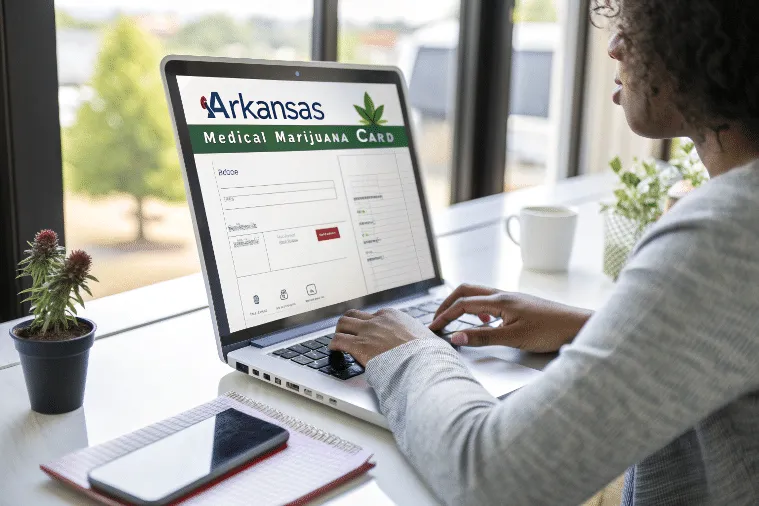
Getting a medical marijuana card in Arkansas is a straightforward process for eligible patients. You’ll need a certification from a licensed physician confirming your qualifying condition, then submit your application and fee to the Arkansas Department of Health to receive your card.
For many patients, medical marijuana is safe when used under medical supervision. Potential concerns include drug interactions with anti-epileptic medications and the need for dose adjustments of existing treatments.
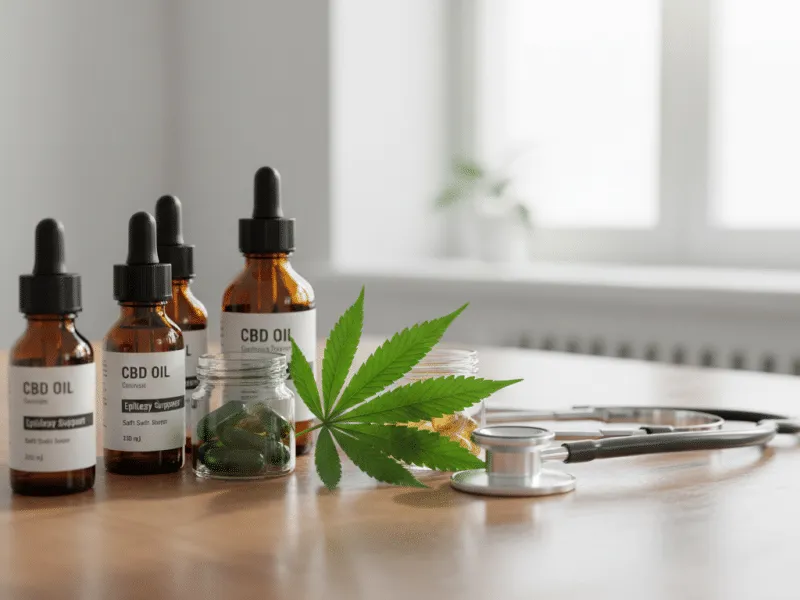
CBD-dominant oils, tinctures, and capsules are most commonly used for seizure management. These forms allow for consistent dosing and precise administration. Full-spectrum products containing multiple cannabinoids may offer benefits through the entourage effect.
No. Medical marijuana is not a cure for epilepsy but may help reduce seizure frequency and severity in some patients, particularly those with treatment-resistant epilepsy.
Yes. Minors can qualify for Arkansas’s medical marijuana program with a parent or legal guardian serving as designated caregiver. The caregiver applies for the card and purchases products on the child’s behalf.
Response time varies. Some patients notice improvements within weeks, while others require several months to find the optimal approach. Careful titration and patience are essential
No. Medical marijuana is not covered by insurance in Arkansas. Patients are responsible for all costs, including physician consultation, state application fee, and product purchases.