Apply for your Card Today!
Image
Featured In and Trusted By

The Benefits of Medical Marijuana for Cachexia Patients in Arkansas

DISCLAIMER: This content is provided for educational and informational purposes only and is not intended as medical advice, diagnosis, or treatment.

The information contained herein should not be used as a substitute for professional medical guidance. Consult with your physician before starting any new treatment, including medical marijuana.


If you live in Arkansas and have cachexia, you know how hard it can be to keep your weight, appetite, and energy levels stable. Also known as wasting syndrome, the condition makes it hard for your body to keep its muscle mass and nutritional status healthy, which has a big effect on your quality of life.

As you look into treatment choices other than the usual ones, you may have heard that medicinal marijuana could help.

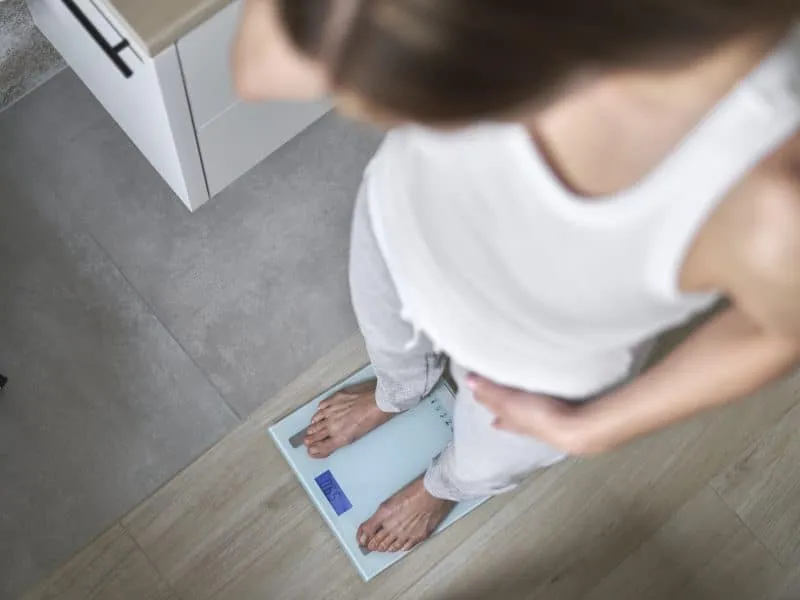
Top view of caucasian woman standing on bathroom scale

Cachexia is More Than Just Losing Weight

Cachexia is a complicated metabolic disorder that causes people to lose weight without trying, lose muscle, feel tired and weak, and have less appetite.

Cachexia is different from regular weight reduction via dieting or eating less because it modifies your body’s metabolism in a way that makes it resistant to regular dietary support alone.

Patients who have cancer, HIV/AIDS, chronic kidney disease, heart failure, or chronic obstructive pulmonary disease may also have this condition.

You might notice the following if you have cachexia:

  • Gradual loss of muscle mass and strength
  • Unintentional weight loss of more than 5% of body weight over 6 months
  • Constant tiredness and weakness
  • Less appetite or feeling full sooner
  • Trouble doing everyday tasks
  • Lower quality of life

The problem with cachexia is that just eating more calories doesn’t always stop the muscle loss and alterations in metabolism.

Your body’s inflammatory response and changed metabolism make a cycle that nutrition alone can’t break easily. This is where medical marijuana might be able to help with treatment in other ways.

Portrait of relaxed woman with eyes closed sitting on table outdoors. She is between buildings and trees wearing a coat.

How Medical Marijuana Helps with Cachexia Symptoms

Cannabinoids, which are active components in medical marijuana, interact with your body’s endocannabinoid system. 

The two main ones are THC (tetrahydrocannabinol) and CBD (cannabidiol). Both are vital for controlling hunger, metabolism, inflammation, and overall energy balance.

Using cannabinoid receptors to make you hungry

One of the most well-known effects of THC is that it makes people hungry. This happens when cannabinoid type 1 (CB1) receptors in parts of your brain that control appetite, like the hypothalamus and limbic system, are turned on.

THC turns on these CB1 receptors, a number of things happen:

  • Your brain’s reward regions respond more strongly to eating, making you want to eat more. 
  • You may not feel full for longer, which lets you eat more calories.

Since the 1980s, the FDA has approved dronabinol (synthetic THC, sold as Marinol) to treat AIDS-related anorexia and wasting because it makes people want to eat. 

Lowering inflammation and metabolic problems

Cannabinoids may help with some of the metabolic issues that cause cachexia, in addition to making people hungry. The condition is characterized by increased inflammatory markers, such as tumor necrosis factor-α (TNF-α) and other interleukins, which lead to muscle degradation and metabolic abnormalities.

CBD has shown that it can reduce inflammation, which may help control this inflammatory response. Cannabinoids might help keep lean body mass by perhaps lowering the inflammatory signals that cause muscle loss. They might also help with hunger.

Dealing with linked symptoms

Cachexia is seldom found in isolation. A lot of patients also have trouble sleeping, nausea, pain, and worry, all of which can make it much harder to eat well and enjoy life. 

Medical marijuana may help with these related symptoms:

  • Nausea relief: THC is known to have antiemetic (anti-nausea) effects, which can help you keep food down and get enough nutrition. 
  • Pain relief: For people whose cachexia is also causing chronic pain, cannabis may help with pain that makes eating and daily activities easier.
  • Mood and anxiety: The emotional toll of chronic illness and wasting can create a cycle of stress that makes you less hungry. Some patients say that cannabis makes them feel better and less anxious. Better sleep may help with overall recovery and metabolic function
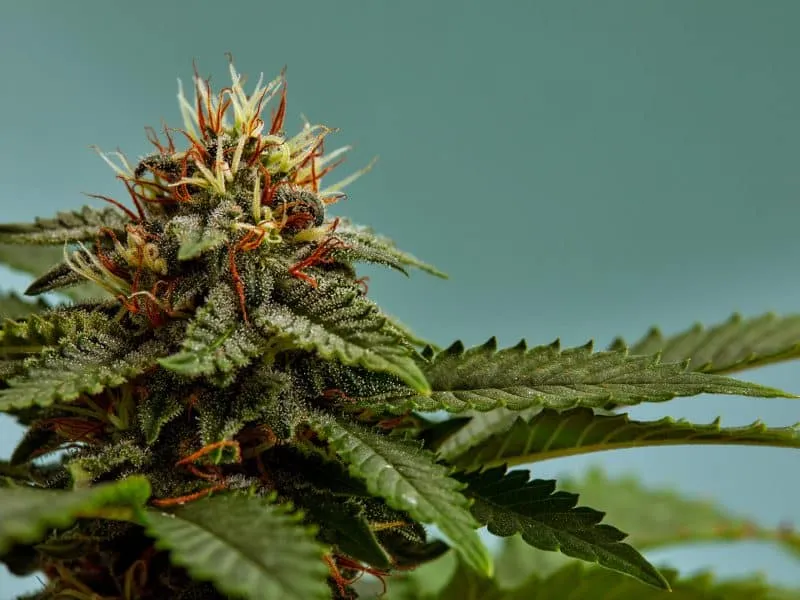
Close-up of a marijuana buds flower isolated on a light blue background. Cannabis can help manage chronic pain, nausea, and vomiting resulting from chemotherapy treatment. Medical and business concept.

What the research says

Research unequivocally indicates that marijuana stimulate hunger; nevertheless, investigations into real weight gain and the total reversal of cachexia yield inconclusive results.

Clinical trials including dronabinol for HIV-related wasting have shown enhanced appetite and modest weight gain in comparison to placebo. 

Research involving cancer patients has indicated comparable enhancements in hunger; nevertheless, persistent increases in lean body mass continue to be difficult to substantiate.

A systematic analysis of cannabis-based medications for cachexia evaluated five randomized controlled trials with 934 individuals suffering from either HIV-related wasting or cancer-associated cachexia. 

Two research indicated trends towards enhanced appetite scores with cannabis medicine usage, although not all studies achieved statistical significance. Quality of life measurements also revealed some favorable trends, but the improvements were not always statistically significant.

As a patient, it’s vital to know what this study implies for you. The research indicates that medicinal marijuana can help you eat more and may make you feel better overall, even if it doesn’t always lead to a big weight gain. 

For many patients, better quality of life, more interest in food, and less nausea are all important benefits that are worth exploring, especially when other treatments haven’t worked well.

Scientists say that there is still a lot to learn about the best doses, the best cannabinoid ratios, and which people are most likely to benefit. 

Because there aren’t any conventional treatment guidelines for cachexia, it makes sense for many individuals to try different things, like medicinal marijuana, with the help of a doctor.

Marijuana buds flowers of cannabis, stethoscope,pills and oil on black table.

How to Get Medical Marijuana for Cachexia in Arkansas

The state of Arkansas allows people with cachexia (sometimes called wasting syndrome) to use medicinal marijuana. If you have been diagnosed with cachexia, this means that you may be able to legally get medical marijuana treatment in Arkansas.

How to Register for an Arkansas Medical Marijuana Card

  • Register with TeleLeaf
  • Connect with a doctor online
  • Connect with one of our licensed doctors to receive your legal recommendation.
  • Register online with the Arkansas State Medical Marijuana System Medical Marijuana Program. Please note you will need your completed physician-written certification from the doctor to complete this step in the process.
  • Print a copy of your card. Patients who apply online can print a copy of their cards after their applications are reviewed and approved.
  • A physical card will be mailed automatically to you once your application has been approved. Processing time is up to 14 days from the date we receive your application and payment.
  • Access medicine at any of the licensed state dispensaries using your card. A full list of Arkansas dispensaries can be found here.

TeleLeaf links Arkansas patients with knowledgeable doctors who know about cachexia and can give them the medical marijuana certification consultations they need. Our simplified approach makes it easy to book appointments, all from the comfort of your home. 

Once you get your card, there are some things to keep in mind: 

  • You can buy up to 2.5 ounces every two weeks. 
  • You need to show your register card and a valid Arkansas ID. 
  • You can’t grow plants at home in Arkansas
How to register for an Arkansas medical marijuana card

Picking the Right Medical Marijuana for Cachexia

Talk to your doctor about which products are best for your condition. 

Edibles and capsules

Cannabis-infused capsules and edibles are oral forms that pass through your digestive system:

  • Provide long-lasting effects (typically 6-8 hours)
  • Offer predictable, consistent dosing
  • Require no inhalation
  • Take longer to feel effects (1-2 hours)

Important: Talk to your doctor about the right starting doses and when to take them. Oral cannabis takes time to work, and your doctor can help you avoid taking too much too quickly.

Tinctures and oral solutions

Cannabis tinctures are liquid extracts that can be taken under the tongue or swallowed:

  • Faster onset than edibles when taken sublingually (15-45 minutes)
  • Allow for flexible, adjustable dosing
  • Can be mixed with food or beverages if preferred
  • No inhalation required

Patients who need to adjust their doses based on how they feel each day like tinctures since they are flexible.

Talk to your doctor about the correct starting dose and when to take it in relation to meals to get the best appetite stimulation.

Other product forms

Arkansas dispensaries also sell topicals, vaporizable goods, and other types. These may not be used as often for controlling cachexia, although some patients use them to help with symptoms like pain or localized discomfort that are associated to the condition.

Products with THC: CBD ratios

Different products have different amounts of THC and CBD. Some THC is usually needed to get your appetite going because this cannabinoid directly activates the CB1 receptors that make you hungry.

Adding CBD, on the other hand, may help reduce inflammation and lessen the euphoric effects of THC.

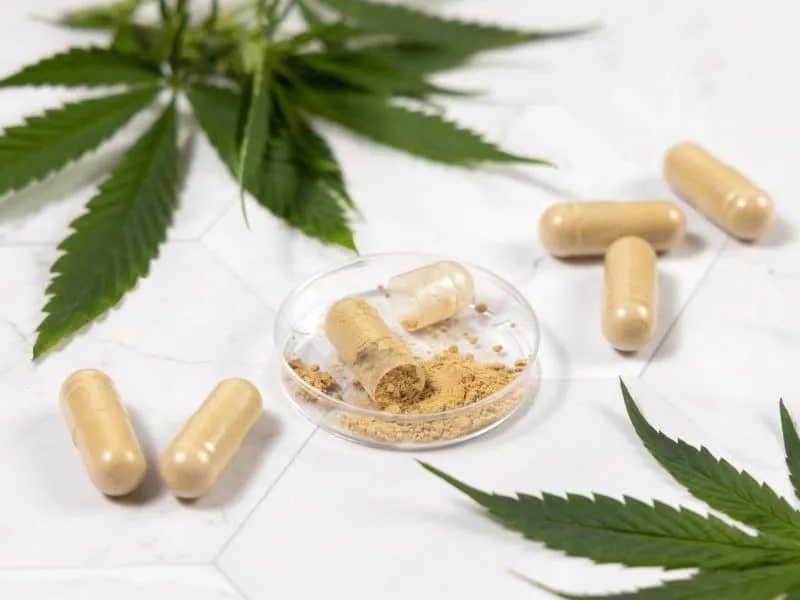
capsules together with cannabis leaf

A Natural Approach to Managing Cachexia

Don’t deal with cachexia without looking at all your possibilities. While medical marijuana isn’t a cure for cachexia, it can help you with your appetite, reduce nausea, and improve your quality of life.

improve your quality of life
How to Get Medical Marijuana Card in Arkansas

Getting a medical marijuana card in Arkansas is a straightforward process for eligible patients. You’ll need a certification from a licensed physician confirming your qualifying condition, then submit your application and fee to the Arkansas Department of Health to receive your card.

01
register-with-teleLeaf

Register with TeleLeaf

02
connect-with-doctor-online

Connect with a Doctor Online

03

Get Access to Medical Cannabis

Trusted By 30K+ Patients
Patient Testimonials

Average Rating 5/5 See Other Reviews