Get Your Medical Marijuana Card Today - Fast & Easy!

Disclaimer: This article is educational and does not provide medical advice or dosing guidance. Use only where lawful. Discuss any trial of medical cannabis with your neurology or palliative care team, especially if respiratory or swallowing concerns are present.
Amyotrophic lateral sclerosis (ALS) presents complex symptom management challenges that affect both patients and their caregivers.
As Arkansas continues to develop its medical marijuana program, patients with ALS may explore cannabis-based therapies as potential additions to their comprehensive care plans.
Understanding how medical cannabis might address specific ALS-related symptoms can inform meaningful discussions with healthcare providers.
This educational overview examines ALS-related symptoms and explores how cannabis may potentially support symptom management, while highlighting important risks and safety considerations relevant to Arkansas patients.
The information presented here focuses on reported benefits, administration routes, and practical considerations for patients and caregivers navigating ALS care.
Important safety note: Discuss any cannabis use with your neurologist or palliative care team. Medical marijuana use must comply with Arkansas state laws and medical marijuana program requirements.

ALS affects multiple physiological systems, creating interconnected symptom patterns that can impact quality of life for both patients and caregivers.
Understanding these symptom domains provides the foundation for exploring potential therapeutic interventions.
Progressive motor neuron degeneration in ALS leads to increased muscle tone and involuntary contractions.
Patients commonly experience tight muscles, nocturnal cramps, and discomfort that interferes with sleep quality and mobility transfers.
Common manifestations:
ALS-related pain typically involves both nociceptive and neuropathic components. Musculoskeletal pain develops from prolonged immobility and increased muscle tension, while nerve-related pain may emerge as the disease progresses.
Pain characteristics:

Multiple factors contribute to sleep disruption in ALS patients, including physical discomfort, muscle spasms, equipment noise, and respiratory changes.
Sleep quality significantly impacts both patient well-being and caregiver burden.
Sleep-related challenges:
Psychological symptoms commonly accompany ALS diagnosis and progression. Patients may experience anxiety related to disease uncertainty, while caregivers face emotional strain from increasing care responsibilities.
Emotional symptoms:

Nutritional challenges:
Excessive saliva production or difficulty managing normal saliva production creates social and practical challenges for ALS patients. This symptom can affect communication and social interactions.
Sialorrhea characteristics:

Medical cannabis research in ALS remains limited, with most evidence derived from patient reports and studies in related conditions.
The following analysis presents reported effects alongside important considerations for each symptom domain.
| Symptom Domain | Reported Patient Experiences | Potential Mechanisms | Described Effects | Important Tradeoffs | Clinical Discussion Points |
| Spasticity and Cramps | Periods of reduced muscle tension; decreased cramping episodes | CB1 receptor modulation in motor control pathways | Less frequent cramping; improved muscle relaxation | Sedation effects; potential perceived weakness; increased fall risk | “If muscle tone decreases, how might this affect safe transfers and mobility?” |
| Pain Management | Reduced pain interference with daily activities; improved comfort levels | Central and peripheral pain pathway modulation | Decreased pain intensity; better rest quality | Cognitive effects; potential interactions with existing pain medications | “Which specific pain types interfere most with your daily function?” |
| Sleep Disturbance | Extended sleep periods; fewer nighttime awakenings | Sedative properties; anxiety reduction effects | Longer sleep duration; improved sleep continuity | Morning grogginess; respiratory depression risk in advanced ALS | “Do you currently use NIV or CPAP? Any morning headaches or excessive sleepiness?” |
| Anxiety and Mood | Calmer emotional state; improved coping with daily challenges | CBD anxiety reduction; THC mood elevation | Reduced anxiety levels; better emotional regulation | Paradoxical anxiety in some patients; memory and attention effects | “Have you used cannabis previously? How did it affect your mood and thinking?” |
| Appetite and Weight | Increased interest in eating; improved meal completion | THC-mediated appetite stimulation (orexigenic effects) | Enhanced appetite; better nutritional intake | Sedation potentially affecting swallowing safety | “Does sedation make swallowing more difficult? Any history of choking episodes?” |
| Sialorrhea | Perceived reduction in drooling; improved social comfort | Xerostomia (dry mouth) perception | Reduced apparent drooling; easier social interactions | Thicker secretions; potential choking risk | “Has thicker saliva ever made swallowing more challenging for you?” |
| Caregiver Strain | Easier caregiving due to improved patient sleep and mood | Indirect benefits through improved patient symptoms | More manageable nighttime care; reduced daily stress | Supervision requirements during impairment periods | “How will supervision needs change during cannabis treatment? Who can assist?” |
Different cannabis administration methods offer varying onset times, duration of effects, and practical considerations for ALS patients and caregivers.
Timing characteristics:
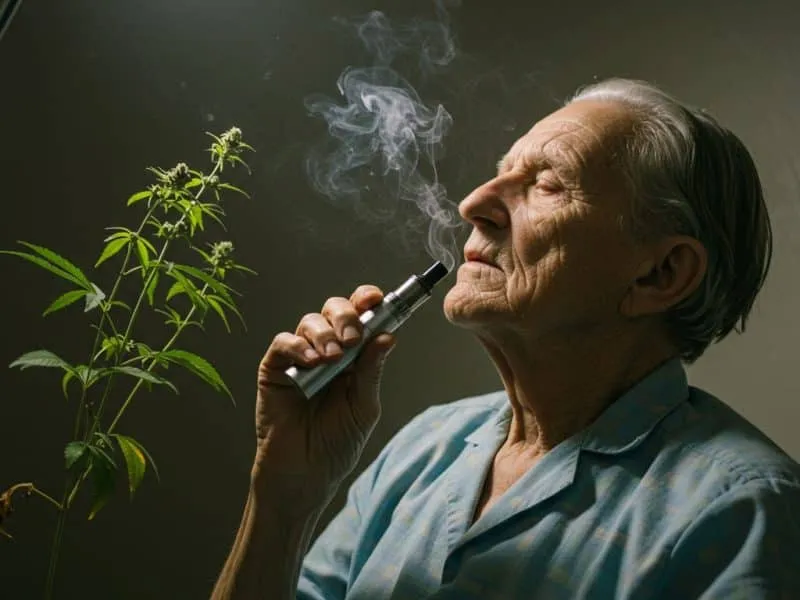
Rapid onset makes vaporization useful for breakthrough spasticity or cramping episodes. However, airway irritability and equipment handling requirements may present challenges.
Arkansas patients with compromised lung function should exercise particular caution with inhalation methods.
Practical factors:

Timing characteristics:
ALS considerations: Sublingual and buccal absorption methods offer moderate onset timing with manageable duration. These routes may be easier for caregivers to administer and can accommodate patients with swallowing difficulties.
Practical factors:

Timing characteristics:
ALS considerations: Extended duration makes oral products suitable for nighttime symptom management. But swallowing safety and aspiration risk require careful evaluation, particularly for patients with bulbar involvement.
Practical factors:
Timing characteristics:
ALS considerations: Limited research exists for topical cannabis applications in ALS. These products may address localized pain or muscle tension with minimal systemic effects.
Practical factors:

Productive discussions with your neurologist or palliative care team require thoughtful preparation and specific questions about your individual situation.
Symptom prioritization questions:
Medical safety assessments:
Functional considerations:
Integration planning:

Successful cannabis therapy integration requires careful caregiver planning and ongoing observation to maintain safety and effectiveness.
Safety planning:
Mealtime considerations:

Movement assistance:
Home safety protocols:
Observation requirements:

Medical cannabis research specific to ALS remains limited, requiring healthcare providers and patients to extrapolate from related conditions and patient-reported outcomes.
Research status:
Analog research:


Medical cannabis is not a cure for ALS. It may provide symptom relief for certain ALS-related issues such as spasticity, pain, and sleep disturbance, but it does not alter disease progression or provide curative effects.
Oral-mucosal products (tinctures, sprays) and edibles work better for managing longer-duration symptoms like pain and sleep disruption.
Is cannabis safe for ALS patients with breathing problems?
Patients with respiratory compromise should discuss cannabis’s sedative effects with their doctor to determine safety, especially if using NIV, CPAP, or other breathing support devices.
Track symptom changes systematically and document any side effects. Discuss your observations with your doctor after several weeks of consistent use to evaluate effectiveness and make adjustments.

Cannabis may interact with other ALS medications such as muscle relaxants like baclofen or pain medications.
Medical marijuana is legal for qualified ALS patients in Arkansas with a valid medical marijuana card obtained through the Arkansas Medical Marijuana Program. Patients must follow state regulations for possession and use.
With appropriate patient permission or legal proxy documentation, healthcare teams can include caregivers in treatment planning discussions to address safety and practical implementation concerns.

Getting a medical marijuana card in Arkansas is a straightforward process for eligible patients. You’ll need a certification from a licensed physician confirming your qualifying condition, then submit your application and fee to the Arkansas Department of Health to receive your card.