Apply for your Card Today!
Image
Featured In and Trusted By

How Medical Marijuana Benefits Alzheimer’s Patients in Arkansas

Disclaimer: This information is educational and not medical advice. Medical marijuana for Alzheimer’s disease involves complex considerations that need a physician’s guidance.


Living with Alzheimer’s brings different challenges. Patients experience:

  • Forgetting things or getting confused
  • Anxiety or worry
  • Trouble falling asleep, waking up frequently, or feeling restless at night
  • Mood changes that don’t feel like your usual self
  • Less interest in eating or forgetting to eat meals
  • Physical discomfort from conditions like arthritis that may accompany Alzheimer’s
  • Frustration or agitation

How medical marijuana might help

Medical marijuana comes from the cannabis plant and contains compounds called cannabinoids.

CBD (cannabidiol): A non-intoxicating compound that won’t make you feel “high.” CBD has been found to help with anxiety, discomfort, and sleep.

THC (tetrahydrocannabinol): The compound that can produce a “high” feeling. In carefully controlled amounts, THC may help with appetite, sleep, and anxiety.

selective focus of grey hair lady with walking stick resting on sofa at home

Ways Medical Marijuana Might Help with Alzheimer’s Symptoms

Dealing with anxiety and feeling more at ease

A lot of patients with Alzheimer’s get more anxious. They worry about forgetting things, not knowing where they are, or being stressed about how their abilities are changing. Studies show that CBD and little amounts of THC may help with anxiety, which could make you feel more at ease and relaxed during the day.

Some patients say that smoking medicinal marijuana makes them feel less anxious and more at ease. This can help you get along better with family and friends and enjoy activities more.

Sleeping better at night

Medical marijuana might help if you have trouble falling asleep, wake up a lot, or feel restless at night.

CBD in particular looks like it could help you sleep better, which will help you feel better during the day.

Getting better sleep can provide you more energy, less disorientation during the day, and better health in general. Getting enough sleep is good for your mental and physical well-being.

elderly-caucasian-woman-sleeping-on-the-bed-2025-02-10-11-36-10-utc

Improving appetite and nutrition

You might not want to eat as much as Alzheimer’s gets worse, or you could forget about mealtimes. THC makes you hungry, which is known as “the munchies.” This impact might help make sure you’re eating enough to stay strong and healthy.
A good diet helps your body work better and may make you feel more energized and involved.

Relieving pain and discomfort

CBD may help with arthritis pain, general aches and pains, or other physical discomfort because it has anti-inflammatory qualities. Lessening discomfort might make it easier for you to move, do things you enjoy, and just feel better in your body.

Some people put topical marijuana treatments directly on aching muscles or joints to get relief in a specific area without affecting their thoughts.

Supporting better mood and emotional well-being

Alzheimer’s can affect your mood, sometimes causing feelings of sadness, irritability, or emotional ups and downs. Some people find medical marijuana helps stabilize their mood, reducing frustration and helping them feel more like themselves.

While research is still developing, these potential benefits may improve your daily quality of life and your relationships with loved ones.

woman-relieving-pain-and-discomfort

Important Things to Consider Before Trying Medical Marijuana

How it might affect your thinking and memory

Since Alzheimer’s already affects your memory and thinking, it’s important to know that higher amounts of THC could potentially make confusion worse. This is why doctors recommend:

  • Starting with very small amounts, particularly of CBD-rich products with minimal THC
  • Using medical marijuana with support from family members or caregivers who can help monitor effects
  • Being honest with your doctor about any changes in your confusion or memory

Your doctor can help find the right balance that provides benefits without worsening cognitive symptoms.

Safety and avoiding falls

THC can make you feel drowsy or dizzy, which could increase your risk of falling. Since staying safe is a priority, medical marijuana use should be supervised, especially when you’re first starting or adjusting amounts.

Having someone with you when you use medical marijuana and during the first few hours afterward helps ensure your safety and allows monitoring for any balance or coordination issues.

Glass jar with cannabis on a jute background with copy space.

Interactions with your other medications

If you take other medications—and most people with Alzheimer’s do—medical marijuana can interact with them. This is particularly important for:

  • Medications that help you sleep
  • Blood thinners
  • Antidepressants
  • Other medications for Alzheimer’s symptoms

Your doctor needs to know about all the medications you take to ensure medical marijuana won’t cause problems when combined with your current prescriptions.

The importance of support

Being honest about Alzheimer’s symptoms is hard, and managing treatment adds complexity. You deserve support from family members, caregivers, or trusted friends who can:

  • Help you remember when to take medical marijuana
  • Notice whether it’s helping your symptoms
  • Watch for any concerning side effects
  • Assist with the application process and purchasing products
  • Communicate with your doctors about your experiences

Having a support system doesn’t diminish your autonomy—it helps ensure you receive the best possible care.

medications-that-help-you-sleep-

Accessing Medical Marijuana in Arkansas: Your Patient Journey

Arkansas’s medical marijuana program

Arkansas operates a medical marijuana program that allows patients with certain conditions to legally use cannabis for medical purposes.

A lot of doctors in Arkansas have worked with Alzheimer’s patients before and can talk to you about whether medical marijuana might help you.

Talking with your doctor

  • Describe your symptoms honestly. The anxiety, sleep problems, appetite changes, or discomfort you’re experiencing
  • Discuss your current medications and treatments
  • Ask questions about how medical marijuana might help you specifically
  • Express any concerns you have about side effects or changes in your thinking
  • Bring a family member or trusted person for support if that helps you feel more comfortable
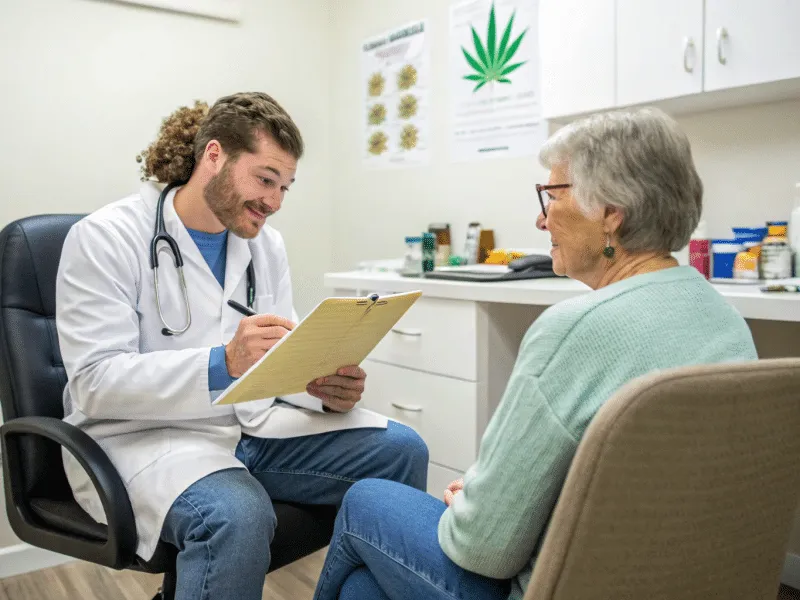
medical-marijuana-doctor-consultation-with-patient

Moving Forward with Medical Marijuana for Alzheimer’s

TeleLeaf connects patients with caring healthcare professionals who know what it’s like to live with Alzheimer’s disease. You can talk about your symptoms, ask questions, and see if medical cannabis might help you feel better during a telemedicine appointment with a licensed doctor.

Sign up for a medical marijuana card today. You can also call us at (504) 264-3123 for any questions.

person-with-alzheimer-s--
How to Get Medical Marijuana Card in Arkansas

Getting a medical marijuana card in Arkansas is a straightforward process for eligible patients. You’ll need a certification from a licensed physician confirming your qualifying condition, then submit your application and fee to the Arkansas Department of Health to receive your card.

01
register-with-teleLeaf

Register with TeleLeaf

02
connect-with-doctor-online

Connect with a Doctor Online

03

Get Access to Medical Cannabis

Trusted By 30K+ Patients
Patient Testimonials

Average Rating 5/5 See Other Reviews